
Retaining Walls & Concrete Masonry
Strong walls that hold back soil, prevent erosion, and enhance your property.
Why Your Property Needs Retaining Walls
Slopes, hills, and uneven terrain create challenges for your property. Soil erodes down hillsides, water runs where you do not want it, and usable space gets wasted on unusable slopes. Retaining walls solve these problems by holding soil in place, creating level areas, and managing water flow. A well-designed retaining wall turns problem slopes into functional, attractive spaces.
In Carrollwood, many properties have elevation changes that benefit from retaining walls. Whether you have a sloped yard, need to protect your foundation from soil pressure, or want to create terraced garden beds, retaining walls provide structural solutions that also look good. The key is building them correctly so they can handle the soil pressure and water they will face over decades of service.
Here is what retaining walls accomplish:
- Prevent soil erosion and protect your landscaping
- Create level, usable areas from sloped ground
- Manage water drainage and prevent flooding
- Protect foundations from soil pressure and water
- Add visual interest and structure to your landscape
- Increase functional square footage of your property
Types of Walls We Build
Poured Concrete Retaining Walls
Poured concrete walls provide maximum strength for challenging sites. We excavate a footer below the frost line, install reinforcing steel, build forms, and pour the concrete in one continuous structure. These walls handle significant soil pressure and can be designed to support any height within practical limits. We finish the visible face with textures, patterns, or coatings to match your aesthetic preferences. Poured walls cost more than some alternatives but deliver unmatched durability and strength.
Concrete Block Retaining Walls
Concrete blocks offer a cost-effective approach for many block retaining wall applications. We build these walls by stacking reinforced concrete blocks on a solid foundation, filling the cores with concrete and rebar, and capping the top for a finished appearance. Block walls work well for medium heights and can be faced with various finishes. They go up faster than poured walls and still provide excellent structural performance when properly engineered and constructed.
Segmented Retaining Walls
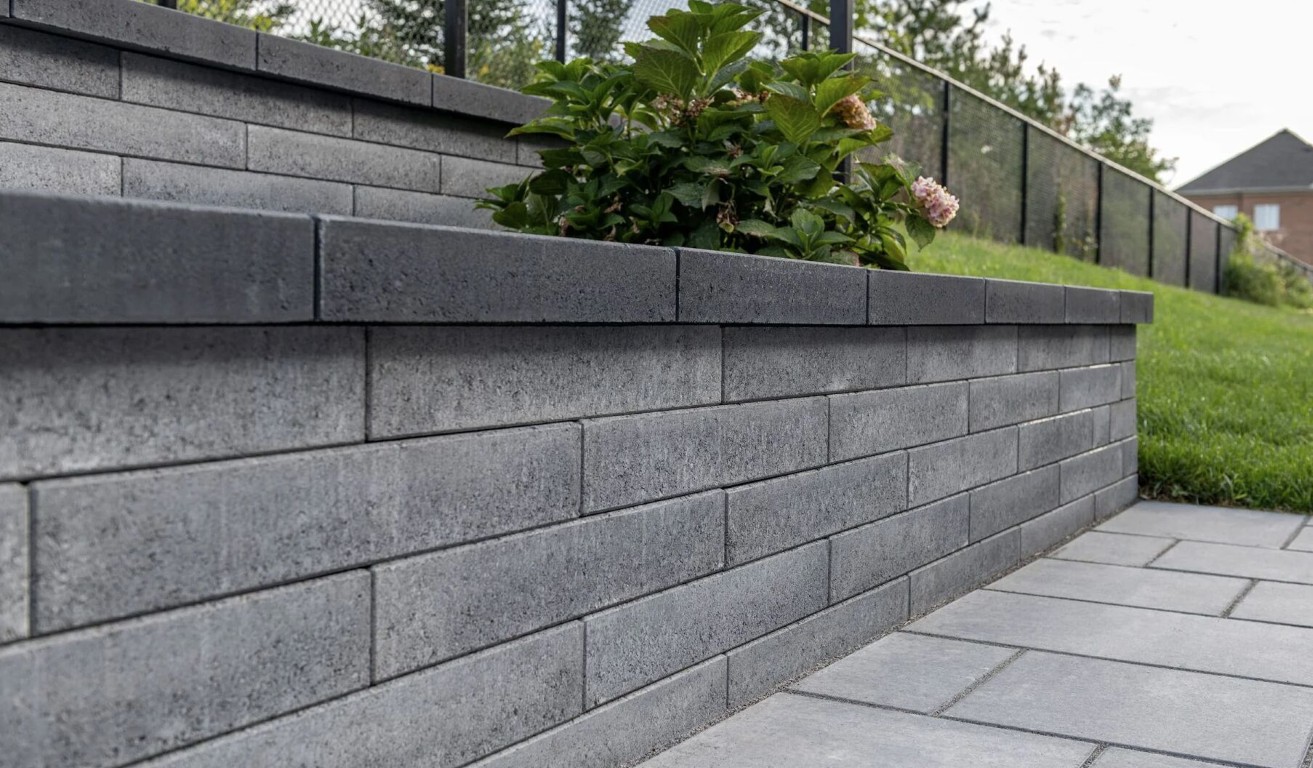
Segmented retaining wall systems use interlocking blocks designed specifically for retaining applications. These systems work well for residential projects under four feet tall. The blocks come in various colors and textures, offering attractive finished appearances without additional facing work. Installation goes relatively quickly, and the walls can be curved or shaped to follow your landscape. We use proper base preparation and backfill techniques to ensure these walls perform as designed.
Other Masonry Work
Beyond retaining walls, we handle various concrete masonry projects. This includes decorative garden walls, privacy walls, pillars and columns, outdoor kitchen structures, and concrete block foundations. Each application has specific requirements for reinforcement, anchoring, and finishing. Whether you need functional structures or decorative elements for your landscape, we build masonry work that stands up to use and weather while enhancing your property appearance.
Critical Design Elements
Retaining walls fail when builders ignore fundamental engineering principles. The most common mistakes include inadequate footings, missing or insufficient drainage, no reinforcement, poor backfill material, and lack of proper compaction. We have seen walls tip over, crack apart, or collapse because someone skipped critical steps to save money or time. We do not cut these corners because we want our walls standing decades from now.
Drainage matters more than most people realize. Water builds up pressure behind retaining walls, and that pressure can crack or topple even thick concrete. We install drainage systems that relieve this pressure by channeling water away safely. This typically includes gravel backfill, perforated drain pipes behind the wall, and weep holes or drainage outlets. Proper drainage is not optional for retaining walls.
Wall height determines many design requirements. Shorter walls under three or four feet can often be built without engineering, though we still follow best practices for footings and drainage. Taller walls need engineering calculations to determine footer size, reinforcement requirements, and backfill specifications. If your wall will be over four feet tall or hold back especially difficult soil, we work with engineers to ensure the design will perform as needed.
Foundation quality determines long-term performance. We excavate below the level where soil freezes or shifts seasonally, install properly sized footings, and ensure the foundation sits on stable, compacted soil. Just like with slab and foundation work, cutting corners on the base means problems later. We also tie the wall to the footer with reinforcement that transfers loads properly. These details separate walls that last from walls that fail.
Frequently Asked Questions
Need a Retaining Wall?
Contact us for a site evaluation. We will assess your needs and provide a detailed proposal.
(813) 535-8650